




By: Foreclosurepedia Staff
Dateline: April 29, 2026
Check Your Pulse: You Might Be Working for Less Than Zero
The dirty secret the NAMFS cartel doesn’t want you running the numbers on is the real net pay per inspection.
They blast out emails promising “$9 per inspection.” Strip away the non-existent fuel surcharges, skyrocketing insurance, vehicle depreciation, maintenance, and the predatory software fees from InspectorADE, and the truth hits hard:
You aren’t making minimum wage. You are paying to work.
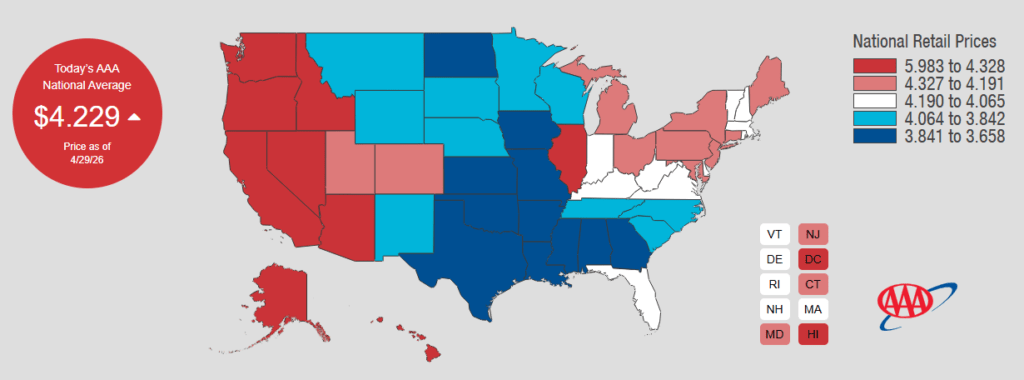
The $4.23 Math Problem
Let’s do the math the NAMFS crowd hopes you’ll never calculate in Q2 2026.
Today’s national average gas price, according to AAA, sits at $4.23 per gallon.
Real-world inspections aren’t short suburban hops. Factor in rural spreads, dirt roads, circling for photos, and stop-and-go traffic: most inspectors burn 1.5 to 2 gallons per order. At two gallons, that’s $8.46 in fuel alone just to reach the property and get the shots.
The order mills and NAMFS members pay $9.00.
Congratulations. After gas, you just made 54 cents.
And that’s before you even start adding the rest of the bleeding:
Auto insurance, GLI and E&O premiums that have exploded
Maintenance, tires, brakes, and oil changes
Mandatory InspectorADE licensing and sync fees
The slow-motion depreciation of your vehicle as you rack up hard miles on foreclosure routes
Run the full cost of ownership and the average inspection doesn’t just pay pennies — it goes negative. You are subsidizing the entire chain.
The Fuel Surcharge That Never Came
On March 30, 2026, the International Association of Field Service Technicians (IAFST) dropped a white paper on HUD and the major institutions laying out the brutal economics and proposing a simple, transparent fuel surcharge.
The response from the cartel?
Silence. Refusal. Contempt.
Not one major institutional order mill — ServiceLink, MCS, or Altisource — has agreed to pass through a fuel adjustment. Some didn’t even bother replying. Others claimed it wasn’t “in the budget” while their parent companies posted strong numbers to Wall Street.
They aren’t bad at math. They made a deliberate choice: let the inspector eat the loss at $4.23 gas.
Altisource stands out in particular — it is both institutionally backed and foreign-owned and controlled. While American field inspectors burn fuel and take criminal risk, decisions flow from overseas ownership that has shown little regard for the real costs on the ground in the U.S.
The Trespassing Trap and the $150 Confession
Gas is only half the nightmare. The real risk begins when you knock on the door.
Take a recent case routed through SingleSource on behalf of a major servicer. The inspector knocked. The occupant called the cops. A trespass citation was issued.
What did the order mill do? Did they pull the security instrument? Cite HUD Handbook 4000.1? Defend the servicer’s authority in court?
No. SingleSource simply paid the $150 fine and reclassified the order as “no contact.”
That inspector now carries a potential permanent NCIC record. The local police already warned him: a second citation means arrest and jail time.
That $150 receipt is a corporate confession: It is cheaper for them to let you take the criminal hit than to defend the work order they assigned. They won’t back your play in court, and they damn sure won’t pay for the gas to get you there.
The Institutional Owners Can’t Hide
ServiceLink is owned by Fidelity National Financial (NYSE: FNF)
MCS was acquired by Stewart Information Services (NYSE: STC) for $330 million in late 2025
Altisource operates as both an institutional player and a foreign-owned and controlled entity
These public and foreign-controlled companies have a duty to disclose material legal and operational risks. A business model that pushes criminal trespass liability onto underpaid American contractors while refusing fuel adjustments at $4.23 gas is the definition of material risk.
InspectorADE: Paying to Feed the Machine
Then there’s the mandatory software tax. InspectorADE isn’t optional if you want to work for the big mills. Per-order and licensing fees add another hit — sometimes 45 cents or more — plus the phone and data costs to run it.
Do 200 inspections a month? That’s real money out of your already negative pocket, just so you can upload photos to the same companies that won’t defend you or cover your fuel.
The Verdict: Sharecropping 2.0
The NAMFS model is simple: drive the base fee to $9 while externalizing every real cost — fuel at $4.23/gallon, insurance spikes, maintenance, software, and criminal liability — onto the lowest person in the food chain.
You provide the truck. You provide the insurance. You provide the labor and take the risk. They provide the $9 and the middle finger.
That 54 cents after gas isn’t profit. It’s not even break-even. Once you add insurance, maintenance, depreciation, and software, many inspectors are losing $6–8 per inspection or more while carrying the legal heat the cartel refuses to touch.
The $9 inspection is a myth. The negative-net inspection is the reality.
Until the NAMFS cartel and their institutional and foreign-controlled masters raise the base fee to something that actually reflects current costs — or agree in writing to fuel surcharges, full indemnification, and a legal defense commitment — the only rational move is to park the truck.
Do the math. Shut off the engine. Stop paying them to work you.
The cartel only wins as long as enough inspectors keep feeding the machine at a loss.