



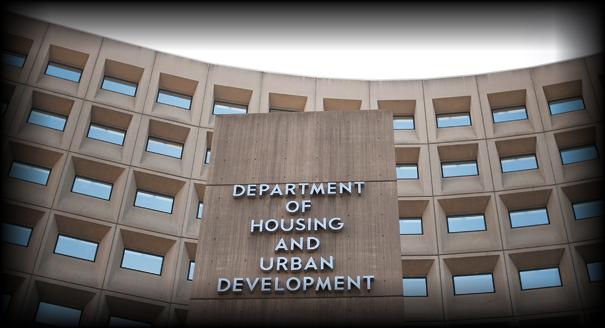
The U.S. Department of Housing and Urban Development’s Office of Multifamily Housing has put out a solicitation that ought to have the attention of every inspection firm, every Field Service Technician and Inspector, and every construction consultant working the government contracting space. HUD is looking to lock down onsite inspection support for new construction and substantial rehabilitation projects tied to its multifamily mortgage insurance underwriting and capital advance programs — and the Agency isn’t playing small. This is a nationwide, multi-year vehicle, and it’s structured to bring on multiple contractors across five separate regions of the country.
What HUD Is Buying
The scope is straightforward on its face and demanding in practice: contractors will conduct onsite inspections of multifamily housing projects under construction or undergoing substantial rehabilitation, feeding HUD the field and site data the Agency needs to make underwriting and construction-phase decisions on its mortgage insurance and capital advance programs. This is inspection work in the truest sense — boots on the ground, documenting the physical condition and progress of a project so the government can make an informed call on federally backed financing.
Structure and Dollars
HUD intends to award this as a Firm-Fixed-Price, Multiple-Award Indefinite Delivery/Indefinite Quantity contract, set aside entirely for small business concerns. No large business need apply, and no set-aside status means no seat at the table. The Agency anticipates making up to three awards in each of five geographic regions — Northeast, Southeast, Midwest, Southwest, and West — covering every state plus Washington, D.C. and Puerto Rico. A firm is not required to bid every region, but HUD has made clear it will reject any regional proposal that only partially covers the territory it claims.
The dollar figures are real. The master IDIQ carries a guaranteed minimum of $133,000 against a ceiling of $37 million. Broken down by region, the guaranteed minimums run from $10,000 in the Midwest up to $45,000 in the Southwest, with regional ceilings ranging from roughly $2.35 million in the Midwest to nearly $11.82 million in the Southwest. The base period of performance runs a full five years, February 1, 2027 through January 31, 2032, with an option to extend services up to six additional months.
HUD has also written in on-ramp and off-ramp provisions, meaning the pool of awarded contractors isn’t necessarily frozen for five years. The Agency can bring additional small businesses onto the vehicle later if it decides more capacity or competition is warranted, and it can push a non-performing contractor out of the active ordering rotation. Firms that get in on this now should read that as an argument for staying sharp on performance, not a reason to slow-walk the proposal.
Why This Matters to the Field
Foreclosurepedia has spent years documenting how the mortgage field services industry treats the people who actually do the work — the Field Service Technicians and Inspectors who show up at the property, take the photos, and file the reports that servicers, investors, and now HUD itself rely on to make decisions worth billions of dollars. A contract of this size, spread across every region of the country, is the kind of opportunity that can either get built on fair subcontracting terms or get run the same way too much of this industry already runs: primes taking the fixed-price award and squeezing the field on the back end. Small businesses winning a seat on this IDIQ have a rare chance to set the terms of engagement with their own Inspectors from day one, rather than inheriting a race-to-the-bottom pay structure from someone else’s contract.
The Clock Is Running
This is a real federal procurement, not a placeholder notice, and it carries real deadlines. Firms considering a bid need to move now on capability statements, teaming decisions, and pricing methodology — HUD’s pricing requirements call for a detailed mathematical breakdown of labor categories, rates, and hours behind every unit price, not a back-of-the-envelope number. That takes time to build correctly, and it is not something to start the week a proposal is due.
Foreclosurepedia isn’t publishing the direct solicitation link here. If your firm is small-business certified, has genuine multifamily construction inspection capability, and wants more detail on this opportunity — including which regions still make sense for a competitive bid and what the technical and pricing proposal actually needs to contain — reach out to Foreclosurepedia directly. We’ve covered this industry from the field up for years, and we’d rather see this contract go to firms that will treat their Field Service Technicians and Inspectors right than watch it disappear into the same consolidation pattern we’ve spent this publication’s history writing about.