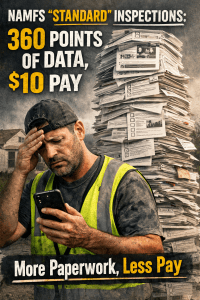



On May 13, 2025, the U.S. Senate Homeland Security Subcommittee on Disaster Management, chaired by Senator Josh Hawley (R-MO), convened a pivotal hearing to scrutinize the claims practices of major insurers, notably Allstate and State Farm, in the aftermath of Hurricanes Helene and Milton. The session unveiled allegations of systematic underpayment, manipulation of damage assessments, and retaliation against whistleblowers. As was brought forward, the McKensie doctrine was alive and well. The prevaricating discussions were nearly identical to how the NAMFS Miller Regime and his membership interact with Labor in our Industry on a daily basis!
McKinsey & Company advised Allstate to take a more aggressive approach to litigating claims. They believed Allstate could improve its financial results by making a firm decision to take all disputed claims to trial, regardless of the cost, according to a paper on ERISA claims. This strategy was based on the idea that policyholders and their attorneys would be less likely to pursue legal action if they knew Allstate was committed to litigating all claims.
Independent adjusters Clifford Millikan and Nick Schroeder, affiliated with Pilot Catastrophe Services—a third-party firm contracted by Allstate—testified about directives to alter or delete damage estimates to reduce claim payouts. Schroeder recounted his experience with policyholder Natalia Migal, whose home suffered extensive damage from a fallen oak tree during Hurricane Helene. Initially, Allstate offered $46,000 for repairs, a figure significantly lower than the over $500,000 estimated by a public adjuster. Schroeder stated that his comprehensive assessment was dismissed, and the claim was reassigned when he resisted lowering the estimate.
Millikan corroborated these practices, highlighting a pattern where adjusters faced reassignment or termination if they did not comply with directives to minimize estimates. He emphasized that such alterations often lacked factual basis, undermining the integrity of the claims process.
Policyholders Share Accounts of Undervalued Settlements
Homeowners affected by the hurricanes shared testimonies of receiving initial damage assessments that were substantially lower than actual repair costs. Jacob Vertel from Asheville, North Carolina, described how State Farm’s initial estimate for his hurricane-damaged home was significantly reduced, leaving his residence unrepaired. In a notable moment, State Farm’s Vice President of Operations, Michael Keating, publicly apologized to Vertel during the hearing, acknowledging mishandling of the claim.
Conversely, Allstate’s Chief Claims Officer, Mike Fiato, defended the company’s actions, asserting that the discrepancies in estimates were due to the inclusion of non-covered aesthetic damages by public adjusters. He maintained that Allstate settled Migal’s claim for $100,000, aligning with policy terms.
Senator Hawley Condemns Industry Practices
Senator Hawley criticized the insurers for what he described as “institutionalized fraud,” accusing them of exploiting disaster victims to maximize profits. He highlighted the disparity between the companies’ substantial earnings and the inadequate support provided to policyholders during crises. Hawley emphasized the necessity for accountability, stating, “Insurance companies exist so that when disaster strikes, victims have somewhere to turn. But instead, big insurance companies are defrauding devastated families and profiting from their pain.”
Calls for Reform and Regulatory Oversight
The hearing underscored the need for comprehensive reform in the insurance industry, particularly concerning claims handling after natural disasters. The testimonies revealed a troubling pattern of insurers prioritizing cost-saving measures over fair compensation, often at the expense of policyholders’ well-being. Senator Hawley and other lawmakers signaled intentions to pursue legislative and regulatory actions to ensure transparency, prevent manipulation of damage assessments, and protect consumers from unjust practices.
Wright National Flood Insurance Co. and U.S. Forensic LLC, an engineering firm, were sued by New York homeowners who claim the companies conspired to manipulate reports and avoid paying for damages from Hurricane Sandy in 2012. Both State Farm and Allstate used and may continue to use US Forensic. More on point, though, sounds a hell of a lot like how our Industry operates when Vendor Managers can alter, change, or delete anything that a Field Service Technician or Inspector submits and then chargeback Labor, at will.
The revelations from this hearing have sparked a broader conversation about the role of insurance companies in disaster recovery and the imperative for systemic change to uphold the rights and needs of policyholders. When taken in combination with our Industry’s use of five dollar inspectors to justify these types of claims it raises the alarm that we need both an educational and licensing regimen. The IAFST University regularly provides education, with digital verification each and every day. Maybe it is time that we begin requiring such throughout our Industry.