



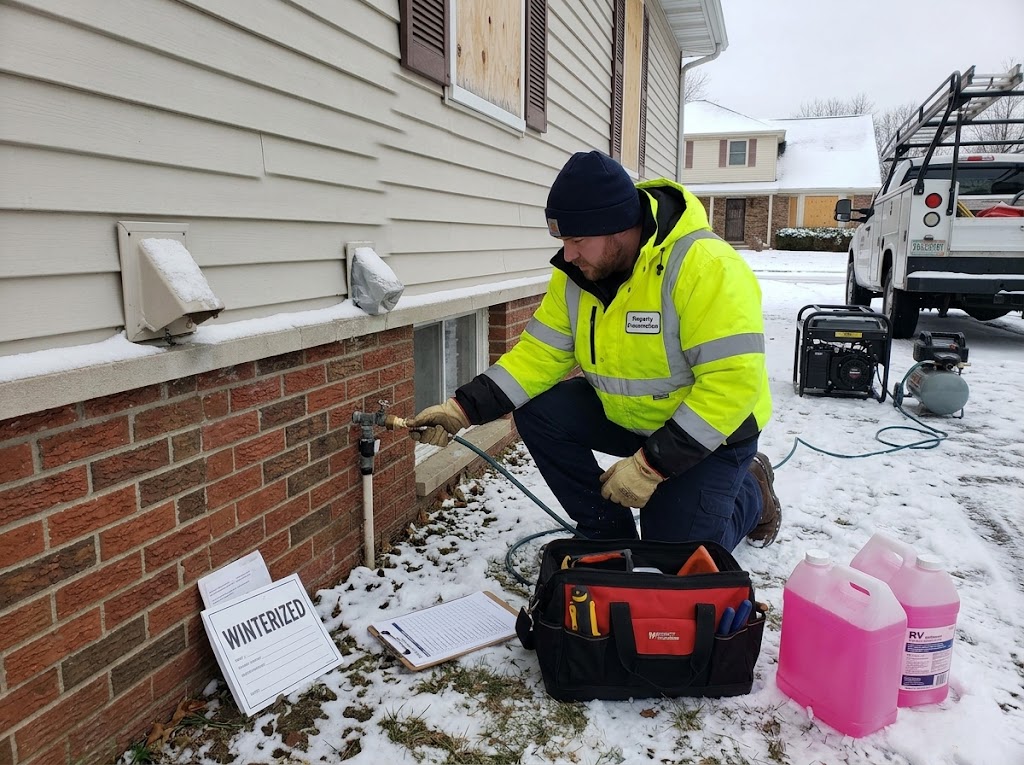
The temperatures are dropping and the winterization orders are starting to move. This is the month the work shifts from grass cuts to pipes, and this year the weather is not ordinary.
NOAA’s Climate Prediction Center says El Niño is strengthening. Its September 10 diagnostic discussion put the chance of a very strong event this fall and winter above 90 percent. It also put the chance of a historic event, stronger than any El Niño on record since 1950, at 75 percent for October through December.
Seasonal average sea surface temperature anomalies in the central-eastern equatorial Pacific are forecast to peak at approximately +3.7°C above normal for the October–December period. This is the super El Niño Foreclosurepedia has been watching, and it is no longer a forecast. It is happening.
What A Super El Niño Does To The Map
A strong El Niño shifts the Pacific storm track south. The Southwest, Texas, the Gulf Coast, and the Southeast sit in the path of that track and should expect a wetter and stormier winter than usual.
The Pacific Northwest usually goes warmer and drier, with weak mountain snowpack. The northern Plains and Upper Midwest can run drier at times when the southern track dominates, but clippers and sudden cold snaps remain on the table.
The Northeast gets the most complicated pattern. Inland areas can take rounds of heavy, wet snow while the coast sees rain or mixed precipitation.
NOAA’s temperature outlook leans above normal across much of the West, the northern tier, and parts of the East. The Farmers’ Almanac, which uses its own formula and not NOAA’s science, calls the Southeast cool and wet. The two disagree there, and Foreclosurepedia is reporting both.
Why A Mild Winter Is The Dangerous One
Forecasters say it plainly: even the strongest El Niño does not deliver the textbook outcome everywhere. A seasonal outlook tells you the odds over three months. It does not tell you what the thermometer reads on one January night.
A warm-leaning winter is exactly when servicers and order mills slow-walk winterization orders, because the weather looks forgiving. Then a single Arctic push arrives and the lines freeze in houses that were never drained.
The South is the real exposure. Properties in Texas, Georgia, Alabama, and the Carolinas are routinely skipped because freezes are rare. A stormier southern track means more rain, more roof leaks, and more water intrusion in vacant houses, with a hard freeze still possible on top of it.
Foreclosurepedia expects that when those pipes burst, the damage will be blamed on Labor and not on the order that never came. Field Service Technicians and Inspectors should document every property they touch.
Who Does What
Field Service Technicians perform the physical work of draining, blowing out, and treating the plumbing. Inspectors do the assessment work: occupancy checks, condition reports, and documenting freeze damage when they find it. The two jobs carry different pay, different liability, and different legal treatment, and they should never be run together.
A winterization typically pays $45 to $50. They should be around $180. That number does not change because the gear costs more or the house is bigger. Every tool on this list comes out of that payment, so buy right and buy once.
The Gear That Belongs On The Truck
Air compressor. This is the heart of the job. A portable compressor with a tank and a built-in regulator lets you blow out the lines at a controlled pressure. Set it to whatever the work order specifies. Most residential plumbing does not need the compressor’s maximum, and over-pressurizing old pipe is how a winterization turns into a flood.
Air hose. Carry at least 50 feet with quick-connect fittings, plus a short whip hose. Vacant houses rarely have an outlet where you want it, and a short hose forces you to drag the compressor through the house.
Pressure gauge. A gauge in the 0 to 100 psi range is non-negotiable. The gauge is how you prove the system holds, and photographing it at the end is how you prove the job was done. Carry a spare, because a cracked gauge ends a job.
Garden hose and adapters. Keep a short garden hose and a set of male and female hose-thread adapters. You will use them to connect your air source to an exterior hose bib or an interior fitting. You will also use them to run water for a pressure check when the house has none.
Pink solution. This is RV and marine antifreeze, a propylene glycol product rated for burst protection. It goes into every trap, toilet tank, and toilet bowl after the lines are blown out. Never use automotive ethylene glycol in a drain line. Buy by the case, because a three-bathroom house with a washer and dishwasher eats more than one jug.
Shutoff and fitting tools. Bring a water meter key and curb stop key, a pipe wrench, channel locks, and an assortment of caps, plugs, and PEX and copper fittings. You cannot drain a house you cannot shut off, and many properties arrive with a seized or missing main valve.
Water heater tools. Carry a drain hose and a short length of tubing. The heater must be isolated and drained, and the electric or gas supply must be handled according to the work order. In the South, we carry a piece of metal coat hanger to run up the tank nozzle due to calcification.
Support gear. Bring a wet-dry vac for the water you will spill, towels, a headlamp, gloves, and safety glasses. Add hearing protection if you run a loud compressor in a closed house.
Power backup. Many vacant houses have no electricity. A small generator or a compressor with its own power source keeps a no-power property from becoming a rejected job.
Photos and documentation. Photograph the gauge, the shutoff, each trap treated, and the water heater drained. Winterization disputes are decided by pictures, and Field Service Technicians and Inspectors who cannot prove the work get chargebacks.
Do Not Take The Job Blind
Read the work order before you drive to the property. Specifications vary by client and by property type, and a wet heating system, a sprinkler system, or a well changes the procedure entirely. If the order does not fit the house, document it and ask before you start.
Do not accept a winterization at a rate that cannot cover your gear, your fuel, and your time. A bad rate on a hard job is how Labor ends up working for free.
The season is turning. The storm track is moving. The pipes are about to find out who prepared.