
Thu Dec 4 14:48:08 EST 2025
Blog

NFN Bankruptcy Finalizes With Payments Soon to Flow Outward

The long and tortured saga of the National Field Network bankruptcy has finally staggered to its belated conclusion, closing the book on nearly eight grueling years of confusion, litigation, and quiet devastation throughout the mortgage field services industry. What was once framed as an involuntary bankruptcy meant to restore some sense of order to the chaos has instead become a case study in how uniquely unprotected Field Service Technicians and Inspectors truly are when large prime contractors implode under the weight of their own internal contradictions. The finality of this proceeding does not feel like justice so much as the exhaustion of every legal avenue, leaving in its wake thousands of pages of filings, a trail of unpaid labor, and more questions than answers about how an operation of this scale could disintegrate so completely while regulators and asset managers alike looked the other way. What makes this conclusion particularly bitter for the laborers on the ground is that the industry has already moved on, while the people who did the actual work are left holding the financial body bag. The entire episode reveals deep structural issues that continue to fester unaddressed, even as trade groups and government entities publicly insist that everything is functioning as intended. In reality, the NFN bankruptcy story is not merely an historical footnote; it is a cautionary tale of what happens when labor is deliberately positioned at the bottom of every contractual hierarchy. For many, the closure of the case feels less like the end of a chapter and more like confirmation that this industry is designed to forget its workers the moment they become inconvenient.

The early days of the NFN collapse were defined by frantic communications, contradictory instructions, and the growing awareness among Field Service Technicians that they were not going to be paid for enormous volumes of completed preservation work. Inspectors faced the same grim revelation, watching as occupancy verification invoices, drive-by assessments, and loss-draft photo reports disappeared into the same abyss that swallowed grass cuts and debris removal payments. The chaos was not simply administrative; it became existential for the small contractors who had already floated labor and material costs that asset managers refused to reimburse. Even while filings in the bankruptcy court piled up, many in the field continued performing work, believing that the eventual legal settlement would restore the financial damage. The reality could not have been farther from the truth, as months became years and the legal machinery slowed to a crawl. The widely reported death of NFN’s former executive, Shari Nott, added another layer of disorientation, raising doubts about the future of the proceedings and further muddying the already opaque path toward restitution. What the workers experienced firsthand was not merely corporate mismanagement but the near-total lack of labor protections in an industry built on the misclassification of its workforce.

The drawn-out nature of this bankruptcy produced consequences far beyond unpaid invoices. Field Service Technicians reported lost vehicles, foreclosed homes, ruined credit scores, and shuttered family businesses because of the work orders they fulfilled in good faith but were never compensated for. Inspectors described similar fallout, recounting the number of times they were instructed to complete occupancy reports or verification photos on the promise that payment was imminent, only to be met with silence as the company’s internal structure dissolved. Many contractors expressed outrage not only because they were left unpaid but because they could not understand how such a massive failure was allowed to continue for so long without meaningful federal intervention. The mortgage field services industry operates under the umbrella of federal mortgage insurance programs and investor guidelines, yet the workers remain functionally invisible in policy discussions. The NFN bankruptcy exposed this disconnect in the most brutal fashion possible, demonstrating how the legal architecture is designed to protect everyone except the people doing the actual labor.

As the bankruptcy extended into its fifth, sixth, and seventh years, the sense of fatigue among the creditor-laborers compounded. Many of the same individuals who submitted claims during the earliest stages had long since left the industry, forced out by financial damage that they could not recover from. The court filings read like a ledger of forgotten small businesses, each unpaid claim representing a Field Service Technician who fronted the cost of locks, plywood, fuel, or dump fees based on the industry’s long-standing but ultimately hollow assurances of reimbursement. Inspectors, who are routinely pressured to perform high-volume reporting with razor-thin margins, found that their work— documentation that banks rely upon for legal compliance—held no weight once NFN’s financial structure collapsed. The bankruptcy became a slow-motion illustration of how disposable laborers are considered when placed in an environment engineered around subcontracting layers that blur accountability. Despite these realities, the major national players continued to operate unencumbered, continuing the cycle with new vendors and fresh promises that this time things would be different.

The end of the NFN bankruptcy does not offer any meaningful closure for those who lived through its fallout. Instead, it highlights the striking lack of systemic reforms that should have emerged from such a catastrophic failure. Field Service Technicians continue to operate as de facto employees without the legal protections employees are afforded, a strategy that allows national contractors to avoid workers’ compensation, unemployment insurance, and wage guarantees. Inspectors remain trapped in a parallel arrangement, performing work essential to federal programs but classified in ways that exempt the companies above them from liability when payments stop. This misclassification has long been the quiet secret behind the economic structure of the mortgage field services industry, and the NFN case provided a rare instance where the consequences of this arrangement were laid bare in a public forum. Yet even with such a clear demonstration of institutional vulnerability, the industry appears committed to maintaining the same operational models that led to this collapse in the first place.

Observers who expected the bankruptcy to yield transformative legal precedents have been left disappointed. The ultimate resolution does not address the core question at the center of the saga: why were laborers allowed to absorb the overwhelming majority of financial losses created by corporate misconduct? Field Service Technicians often invest thousands of dollars upfront to complete a single work order, relying on the contractual promise that national vendors will pay them once the job is approved. Inspectors similarly carry the cost of fuel and time, engaging in work that is essential for loan servicing compliance and investor reporting. When a company like NFN collapses, the entire financial risk is forced downward onto the individuals who can least afford it. The bankruptcy court acknowledged the existence of significant outstanding labor claims but provided no mechanism for making these workers close to whole. If anything, the conclusion signals to other national vendors that the risk of stiffing labor is negligible compared to the financial incentives of pushing costs downward.

The industry’s silence throughout the NFN ordeal has been one of its most disturbing features. Large national contractors and asset management firms that worked closely with NFN have taken great pains to distance themselves from its failure, often claiming ignorance about the severity of the company’s financial collapse. This narrative is difficult to reconcile with the volume of reported payment delays, stalled work orders, and labor complaints that were already standard industry chatter before the bankruptcy was formally initiated. Field Service Technicians recall months of empty reassurances, while Inspectors describe a steady decline in communication that signaled the company’s internal structure was already collapsing long before public filings were made. The decision by many industry leaders to quietly shift work elsewhere without addressing the unpaid labor left behind illustrates a moral hazard that continues to define the mortgage field services ecosystem.

For many labor advocates, the conclusion of the NFN bankruptcy underscores the need for independent representation for Field Service Technicians and Inspectors—entities structurally separate from the national vendors and industry groups that have historically controlled the narrative. The absence of a centralized labor voice during the NFN proceedings created an information vacuum in which workers were left to navigate legal filings, creditor notices, and procedural deadlines without guidance. This lack of representation allowed the corporate machinery to operate with minimal scrutiny while laborers scrambled to salvage what they could. The mortgage field services industry remains one of the only national industries with a federally regulated workflow where the primary workforce lacks meaningful collective representation. The NFN bankruptcy should have been the catalyst for the formation of higher-order labor protections, yet no such reforms have been enacted.

The broader implications of the NFN collapse extend into current market conditions, where smaller vendors continue to operate under razor-thin margins while absorbing increasing levels of operational risk. Field Service Technicians repeatedly express concerns that nothing has fundamentally changed since the NFN fiasco, and that any similar corporate failure could produce identical outcomes today. Inspectors worry that the rising volume of occupancy checks and documentation demands, combined with shrinking pay scales, creates the same conditions of financial pressure that preceded NFN’s downfall. Without enforceable wage guarantees, equitable contract structures, and stronger regulatory oversight, the industry remains vulnerable to repeating the same cycle of collapse, insolvency, and labor abandonment.

With the final paperwork filed and the NFN bankruptcy is officially closed, the people who should have been protected remain the ones most deeply scarred. The conclusion marks the end of an administrative process, but it does nothing to repair the financial and emotional damage inflicted upon the labor force that kept the company afloat until its last days. The bankruptcy stands as a symbol of what happens when an industry is allowed to operate without meaningful checks on how it distributes risk. In the end, the story of NFN is not a corporate failure; it is a labor disaster disguised as a legal proceeding. The closure of the case does not mark the end of this conversation. If anything, it reinforces the urgent need to reexamine the foundations of an industry that continues to rely on the financial vulnerability of its workers to remain profitable. Only by confronting these hard truths can the industry hope to avoid another slow-moving catastrophe like the one that took nearly eight years to unwind.

SNAP Benefits Subsidize NAMFS Order Mill’s Billions In Profits

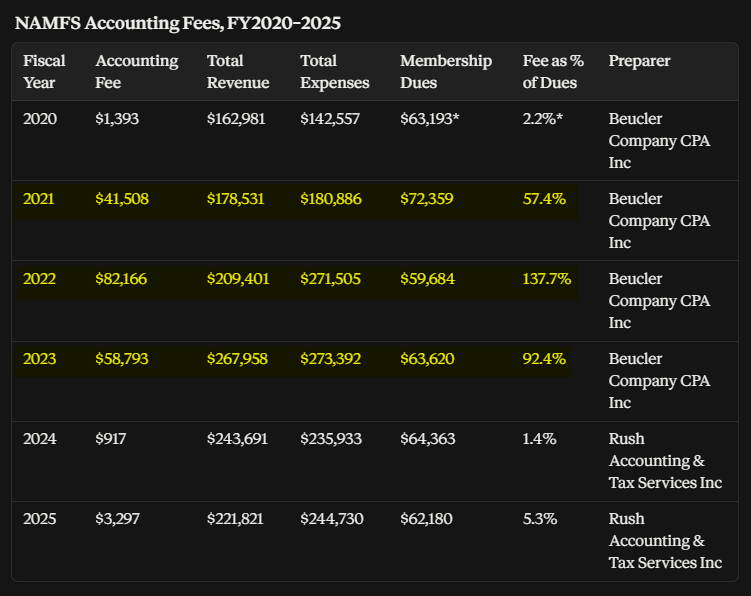
The mortgage field-services industry stands at a crossroads — not merely because of regulatory pressures or changing mortgage-servicing practices, but because its very workforce has become structurally dependent on public assistance. This year alone, industry estimates suggest that NAMFS national order mills are raking in roughly $8.8 billion in revenue — a sum that reflects the vast scale of property preservation, inspection, and maintenance work outsourced across the country. Yet while those billions flow upward, Labor at the bottom of that chain — the Field Service Technicians and Inspectors tasked with physically securing, cleaning, repairing, and documenting vacant or foreclosed properties — finds itself increasingly unable to survive on pay alone. For many, the only way to make ends meet when working for NAMFS members has become applying for SNAP or Medicaid, turning public benefits into a de facto subsidy for corporate operations. The irony comes even more into focus when the NAMFS Executive Director Eric Miller’s salary comes into focus. Today it consumes well over 100% of all NAMFS member dues requiring funds from the Annual Conference to make up the difference.

That phenomenon is not unique to mortgage-servicing. As recently reported in mainstream media, corporations like Walmart and Amazon are among the largest employers whose workers disproportionately rely on SNAP and Medicaid, despite being full-time or long-term staffers. One analysis notes that these firms “stick taxpayers with the bill for health care and food benefits,” effectively outsourcing labor cost to public programs rather than providing a living wage themselves. Across multiple states, thousands of workers at big corporations draw food stamps — a pattern that critics describe as a form of “hidden subsidy,” shifting the burden of low wages from companies to taxpayers.

The parallels between that retail-sector reliance on public aid and the mortgage-servicing industry’s dynamics are striking. When a corporation’s business model depends on keeping labor costs below subsistence level, the consequences ripple well beyond individual employees. It becomes a structural feature of the economy: one where labor — even labor critical to maintaining the value of real-estate assets — is undervalued, privatized, and quietly propped up by the social safety net. Contractors whom I spoke with confirm that this isn’t hypothetical.

One longtime Field Service Technician — who asked to remain anonymous — recalled: “Some weeks I bust my ass from sunup to sundown cutting grass, clearing trash, boarding windows, hauling old furniture and debris out of empty houses. I might gross five or six hundred dollars, but by the time I pay for gas, tools, insurance, and wear and tear on my truck, I’m lucky if I net enough to cover rent. My SNAP card feeds more meals than my paychecks do. Without food stamps, I couldn’t work in the Industry.”

These first-hand testimonies illustrate how deeply the industry relies on a de facto social safety net to keep its workforce afloat. It’s hardly an accident that the same phenomenon appears in low-wage retail and service sectors. In analyses of corporations like Walmart and Amazon, many employees who work full-time still depend on SNAP or Medicaid. The conclusion seems unavoidable: these firms are neither paying living wages nor absorbing their full labor costs internally — instead, they externalize those costs, passing them along to the public.

For the mortgage-servicing mills, the logic is identical. By classifying technicians and inspectors as independent contractors, they dodge typical wage and benefit obligations — while nonetheless wielding full control over price schedules, order volume, compliance standards, and deadlines. When those contractors can only survive via public aid, the mills have effectively outsourced the bottom line of labor cost to taxpayers. That may fuel profitability, but it erodes the dignity and economic agency of workers.

Defenders of large employers — whether in retail or field services — often argue that SNAP dependence doesn’t automatically imply poor wages; rather, they point to household size, dependency burdens, or regional cost-of-living factors. Indeed, companies like Amazon and Walmart have responded to criticism by highlighting corporate wage increases or benefits packages. Yet those incentives leave out independent contractors entirely — the technicians and inspectors whose work is seasonal, unpredictable, and classified to avoid systemic liability. For them, community size or family structure isn’t the root cause: the issue is compensation disconnected from living standards. Moreover, the reliance on public assistance undermines labor-market transparency. When paystubs alone do not reflect true worker livelihoods — because benefits like SNAP effectively pad income — it becomes harder to see how exploitative corporate labor practices have become. Corporations may publicly claim they pay “market rate,” but when “market rate” is defined as compensation that drives employees to welfare programs, the term becomes corrupted. What remains hidden is the fact that everyday taxpayers are subsidizing labor costs that corporations refuse to internalize.

The human toll is real, and it extends beyond financial precarity. Some technicians have described the moral and emotional weight of relying on charity to feed their families. One technician reflected bitterly: “I used to be proud — I worked hard, kept a truck, owned my tools. But now? I spend half the month praying benefits don’t cut short and that I actually get paid from these assholes. I’m not asking for charity. I’m asking for a paycheck that works.”

This degradation of labor value matters deeply, not only for individuals but for the sustainability of the industry itself. If contractors continue to rely on public assistance to survive, that signals the system is failing at its most basic economic premise: fair exchange of value for labor. For too long, big corporations across sectors — from retail to real estate services — have treated public benefits programs as implicit cost-saving measures. That must change.

An Inspector with five years of contract-work described similarly precarious economics: “One week I might drive 300 miles, check 20 houses, log 600 photos, and write up reports. Most of that time I’m in my own car, paying for fuel, insurance, maintenance. After expenses — fuel, depreciation, taxes — what I get doesn’t even minimum wage. I’ve got kids. SNAP helps them eat when orders dry up or when QC fails wipe out a week’s pay.”

If the industry wishes to remain viable — and if society wishes to be just — the dependence on SNAP and Medicaid cannot be treated as an inevitable byproduct of low-margin work. It must be recognized as a symptom of a business model that values profit over people. The contractors restoring homes and documenting assets are not gig-hobbyists; they are skilled workers whose labor sustains foreclosure pipelines and the value of mortgage-backed assets. Until the order mills begin paying living wages rather than relying on public subsidies, the billions flowing through the system will continue to be built on the hidden labor of the economically marginalized.

Scenario
# of properties serviced (distinct per year)
# of service events per property per year
Assumed average labor payout per event
Total estimated labor payout (year)
Labor payout as % of $8.8B flows
Implied “non-labor / overhead / management / markup” retained by order mills & vendors
A. Low-volume, minimal servicing80,000 homes (e.g. 20% of foreclosure-starts, once per home)1 event per home$155 (lawn + lock + winterize + inspection)~ $12.4 million~ 0.14%~ 99.86% (≈ $8,787,600,000)
B. Moderate servicing (occasional follow-ups)100,000 homes2 events per home/year$150 per event (some cheaper, some fuller jobs)~ $30 million~ 0.34%~ 99.66% (≈ $8,770,000,000)
C. Elevated servicing / repeated maintenance150,000 homes3 events per home/year$150 per event~ $67.5 million~ 0.77%~ 99.23% (≈ $8,732,500,000)
D. Aggressive servicing scenario (high turnover properties + multiple visits)200,000 homes4 events per home/year$160 per event (some full-service jobs)~ $128 million~ 1.45%~ 98.55% (≈ $8,672,000,000)
E. Hypothetical maximum for labor share (unlikely)300,000 homes4 events per home/year$160 per event~ $192 million~ 2.18%~ 97.82% (≈ $8,608,000,000)


These rough estimates underscore just how minuscule the portion of total industry flows that actually reaches the hands of labor — the Field Service Technicians and Inspectors — appears to be. In nearly every plausible scenario, labor takes home well under 1–2% of the total $8.8 billion circulating through order mills and vendors. In contrast, the vast majority — ~98–99% — of the money remains upstream: in management layers, administrative overhead, markups, “vendor network coordination,” compliance departments, quality-control desks, invoicing systems, subcontractor margins, and profits for the companies controlling the flow. This structural math helps explain why labor pay remains so low: the system was never designed to distribute revenue equitably, but to concentrate it in corporate hands while minimizing the variable cost of the workforce.

That massive discrepancy also reveals the futility of treating low pay as an unavoidable “cost of doing business.” From a purely economic standpoint, there is more than enough money in the system to raise per-order fees significantly — but the structure chooses not to. Instead, it relies on an army of undervalued, often uninsured, independent contractors willing to absorb overhead costs (gas, tools, insurance, vehicle maintenance), payment delays, and even chargebacks.

What the estimates do not capture fully — but what contractors report daily — is how unpredictable and unstable this income becomes once you subtract all real expenses. Fuel, dump fees, materials, time losses due to “QC fails,” waiting weeks or months for payment, chargebacks, and re-inspection demands — all amplify the gap between gross payout and actual take-home pay. In many cases, contractors end up with net incomes well below federal poverty thresholds, forcing them to rely on public assistance (SNAP, Medicaid) to survive.

In other words: the “labor share” of the $8.8 billion may be mathematically small — but its real-world human cost is significant. It reflects a system that treats labor as an externalized cost, to be subsidized privately or socially, while allowing order mills and portfolio managers to reap the rewards.

These numbers highlight the systemic inequalities built into the mortgage field services industry. If labor consistently receives under 2% of total flows — while management, overhead, and profit layers collect the rest — then even a dramatic increase in volume or servicing frequency will not meaningfully change the precarious conditions of contractors and inspectors. This imbalance has clear ethical and regulatory implications. A business model that depends on the public safety net (via Labor’s reliance on SNAP or Medicaid) to subsidize basic labor costs raises serious questions about the sustainability and fairness of the system. It also undermines the legitimacy of classifying technicians and inspectors as “independent contractors”: if the economics of their work yield net incomes below subsistence levels — and they require public aid to survive — their status as independent, self-sufficient business operators becomes deeply questionable. That kind of misclassification has been the target of labor regulators and courts in other industries, and the data suggests the same scrutiny may be warranted here.

Moreover, for those advocating on behalf of labor — trade groups, policymakers, regulators, nonprofits — these estimates show where pressure should be applied. Instead of continuing to treat field-service pay as marginal, order mills and investors should be encouraged or required to recompute compensation based on true cost-of-living, overhead, and risk — not outdated, decades-old rate sheets. Raising per-order payouts so that labor captures a far larger share of total flows is not just a moral imperative, but an economic one, especially if the long-term sustainability of the industry depends on maintaining a stable, experienced workforce.

Finally, the data-oriented breakdown undermines common industry arguments that “order mills simply don’t have the margin” to raise rates. The math shows clearly: even under conservative assumptions, paying Field Service Technicians and Inspectors a living wage (say, doubling or tripling per-order rates) would still leave vast portions of the $8.8 billion unallocated — enough to maintain vendor overhead and profit, while offering fair compensation.

$8.8 Billion Sloshing Around in the Industry as Labor Struggles To Stay Afloat

Take a walk with Foreclosurepedia as we break down how an $8.8 billion delinquency-driven windfall this year has been quietly funneled into the hands of large institutional players while the people who actually keep properties standing—field techs and inspectors—are left fighting for whatever crumbs survive the redirection. The trail begins in the muted glow of a virtual earnings call on August 6, 2020, when Altisource Portfolio Solutions’ leadership dropped revelations that continue to haunt the field services world five years later. What should have been . . .

To read the article Subscribe today!


The $330 Million Shell Game: How Stewart’s Acquisition of MCS Mortgage Services Weaponizes Uncertainty Against Field Labor

The recent acquisition of the core Mortgage Services Business Line of Mortgage Contracting Services (MCS) by SISCO Holdings, LLC, a wholly-owned subsidiary of Stewart Information Services Corporation, for a staggering $330 million is not a victory for the field industry; it is a calculated financial maneuver that immediately places the burden of integration, optimization, and profit-extraction squarely on the backs of the sub-contracted workforce. This seismic event represents the wholesale purchase of a vast, pre-built, and tragically commoditized network of Field Service Technicians and Inspectors whose . . .

To read the article Subscribe today!


Compassion on a Cold Thanksgiving Day

In a mortgage field services industry increasingly defined by economic pressure, regulatory confusion, and the relentless commodification of human labor, it is easy for the broader public to assume that those who work on foreclosed or pre-foreclosed assets operate with a certain emotional detachment. The common narrative suggests that Field Service Technicians, tasked with securing properties, cleaning debris, or performing routine maintenance, are merely cogs in a profit-driven machine that prioritizes asset protection above all else. Inspectors, who perform occupancy checks and condition assessments, are often portrayed as distant intermediaries, responsible for data without being responsible for the people living behind the doors they must knock upon or photograph. Yet for those who have labored within this sector for any meaningful length of time, the reality is more complex and often more gut-wrenching than the sanitized corporate talking points would ever admit. The properties are not just structures, and the work is not just a checklist of tasks uploaded into a portal that rarely functions as advertised. Every foreclosure, every maintenance job, and every occupancy verification crosses paths with families who exist on the razor’s edge between stability and collapse. And sometimes, despite the industry’s attempts to suppress humanity in favor of metrics, a worker’s compassion breaks through. It is in these moments that the truth of who actually carries the moral burden of this industry is most clearly revealed.

Yesterday, on Thanksgiving Day of all days, that truth surfaced during what was supposed to be an unremarkable maintenance rotation on a property that had been struggling for months to meet preservation standards. A Field Service Technician, whose name we will not publish at his request, arrived at a home where the occupants were doing what millions of Americans were doing that morning: attempting to create a holiday meal that symbolized something more than their current circumstances allowed. The Technician’s task was routine and procedural, a mandated maintenance job ordered through an intermediary vendor that likely never paused to consider the ethical connotations of scheduling such work on a national holiday. But as the Technician completed the job, he noticed signs that the family’s Thanksgiving meal was scarce, meager, and profoundly impacted by their financial situation. The husband, wife, and their young daughter attempted to maintain dignity, as families in distress so often do when strangers enter their lives under the authority of mortgage servicers and preservation protocols. For many Technicians, the emotional weight of such encounters is something they must push aside, not because they lack empathy, but because the pressures of chargebacks, unrealistic timelines, and vendor indifference leave no room for human response. Yet this Technician did something different, and in doing so he defied the cold expectations of an industry that too often trains its workers to remain unseen and unfeeling. He left—then came back.

What happened next is the kind of story this industry rarely acknowledges, because it complicates the tidy narrative of labor as interchangeable and disposable. After finishing the work order, the Technician returned not with tools or forms, but with food provided by his church, specifically chosen to ensure that this family could have a proper Thanksgiving meal. He did not do it for social media clout, or for a vendor bonus, or because some corporate policy mandated community engagement. He did it because compassion still breathes in the lungs of the people who actually do the on-the-ground work, even when the task at hand is connected to an industry that often feels predatory and unforgiving. The family accepted the food with humility and gratitude, not wanting their names shared, because the shame society places on the financially struggling is often greater than the shame placed on predatory economic systems themselves. The Technician also insisted on anonymity, partly out of modesty and partly because he understood that the corporate ecosystem he labors within might discourage or even punish acts that do not fall neatly within the confines of allowable expenses or documented tasks. But the story made its way to us in a quiet phone call, and its truth is undeniable. Compassion found a way into a place the industry insists must remain sterile.

To anyone outside the mortgage field services sector, the idea of workers being placed in these morally fraught situations might seem surprising. But to Inspectors who regularly encounter families during occupancy checks, and to Field Service Technicians who cross paths with residents while performing winterizations or debris removals, these moments are painfully common. The difference, as always, is how the industry expects its laborers to respond. Inspectors are instructed to keep interactions minimal, to avoid offering commentary, and to maintain a level of detachment that prioritizes documentation over dialogue. Technicians are told to follow work orders without deviation, to adhere to rigid timelines, and to avoid personal involvement, especially in situations where occupants may be experiencing emotional or financial duress. Yet these workers are human beings first, long before they are job titles. They are fathers, mothers, neighbors, and citizens who see poverty not through curated media coverage but through the lived reality of knocking on doors where a family might be choosing between groceries and utility bills. They witness the consequences of decisions made in boardrooms hundreds of miles away, and they carry the emotional residue home long after the work order is submitted.

The industry’s leadership, comprised of national servicers, hedge-fund-driven asset managers, and multi-layered vendor networks, rarely experiences these human interactions directly. They see data, not faces. They see occupancy codes, not families. They see compliance rates, not scared children watching strangers enter their homes under the authority of foreclosure machinery. And yet these same entities often push narratives portraying their operations as community-oriented, responsible, and guided by partnership with homeowners. In reality, the true burden falls on the workers sent to the front lines of economic collapse. It falls on Inspectors who gently explain to families that they cannot provide legal advice but must still complete their assessments. It falls on Technicians who perform grass cuts outside homes where residents peer out from behind curtains, wondering if the preservation order means eviction is imminent. It falls on laborers whose paychecks are shrinking while expectations rise, and whose humanity is tested daily by circumstances far beyond their control.

In this context, the anonymous Technician’s Thanksgiving act becomes far more than a simple gesture of charity. It becomes a quiet indictment of an industry that depends on laborers to absorb societal pain that executives would rather never acknowledge. It becomes evidence that compassion survives despite a system designed to discourage it. It becomes a story that forces the uncomfortable recognition that those performing the lowest-paid, most physically demanding work are often the only ones preserving the fragments of humanity left in the foreclosure process. While servicers celebrate quarterly earnings and vendors streamline task workflows, real human beings are stabilizing communities one small act at a time. And when those acts arise spontaneously from workers who are themselves underpaid, overworked, and frequently exploited, the contrast between humanity and corporate indifference becomes impossible to ignore.

Critics may argue that such gestures, while admirable, cannot alter the foundational inequities embedded within the mortgage field services system. They may say that the Technician’s generosity does nothing to prevent the next family from facing food insecurity, or the next property from sliding into pre-foreclosure. Those critics are not wrong; systemic issues require systemic solutions. But they also miss the deeper point. Compassion does not solve structural injustice, but it exposes it. When a Technician delivers food to a hungry family on Thanksgiving, it highlights the moral absurdity of asking low-paid workers to act as enforcers of asset preservation while families inside the properties struggle for basic survival. It demonstrates that workers understand the human stakes of foreclosure better than the institutions that profit from it. And it underscores the growing divide between the people who manage property from spreadsheets and the people who enter those properties with their own eyes and hearts open.

This incident also serves as a reminder that the mortgage field services workforce itself is economically vulnerable, often not far removed from the same hardships faced by the families they encounter. Field Service Technicians frequently absorb fuel costs, supply costs, and unpaid administrative time, all while battling inconsistent work availability and vendor nonpayment. Inspectors receive fees that have remained stagnant for more than a decade, even as expectations increase and liability risks multiply. The industry relies on this labor pool yet resists acknowledging its humanity beyond its productivity. The fact that a Technician, likely stretched thin financially like so many others in this sector, still chose to provide a Thanksgiving meal speaks volumes about the character of the workforce. It also shines a light on the stark absence of support or moral leadership from the entities that issue the work orders and collect the profits.

The family that received the meal remains anonymous, as does the Technician, and perhaps that is fitting. Their anonymity allows the story to reflect a broader truth rather than becoming a spectacle focused on individual identities. Families in financial crisis often fear judgment, eviction, or loss of dignity, and this family’s request for privacy reflects the harsh reality they navigate daily. The Technician’s request for anonymity reflects an equally troubling truth: that kindness may be viewed as deviation in a system that demands conformity. Yet their anonymity also protects the purity of the act itself. It becomes not a publicity stunt, not a vendor press release, and not a servicer-funded photo opportunity. It becomes something real in an industry where authenticity is rare.

Ultimately, this story forces us to ask a question that the mortgage field services ecosystem has avoided for far too long: Who, exactly, is responsible for the humanity in this industry? It is not the servicers issuing bulk orders from distant headquarters. It is not the hedge funds trading portfolios of distressed assets. It is not the national vendors updating their portals and generating compliance reports. It is the workers. It is the Field Service Technicians who step beyond the checklist. It is the Inspectors who see beyond the occupancy code. It is the people who, despite being treated as replaceable components, continue to act with compassion in environments designed to strip compassion away.

As this Thanksgiving incident demonstrates, compassion is not an optional accessory in the mortgage field services industry. It is a lifeline. It is the quiet counterweight to a system that too often prioritizes profit over people and efficiency over empathy. And while the corporations managing this industry may never acknowledge it, the truth is that the foreclosure process only appears humane because workers on the ground choose to make it so. The Technician who returned with food did not just fill a table; he reaffirmed something this industry desperately needs but rarely encourages. He showed that even in the harshest corners of foreclosure work, humanity still survives—carried, as always, by the laborers who are expected to give everything and receive nothing in return.