The central players in the dispute represent two of the most recognizable forces within the vendor ecosystem. On one side stands First Rate Field Services and its leadership, including Chad Rulo, who simultaneously serves as President of the National Association of Mortgage Field Services (NAMFS), or whatever they call themselves today to avoid taxes. NAMFS has long positioned itself as the professional voice of the vendor industry, claiming to advocate for standards, compliance, and operational excellence. On the other side of the controversy sits A2Z Field Services and its former leadership, including Amie Sparks. Both companies operated within the same national order distribution system that routes inspection and preservation assignments to contractors, recently sold to Steve Horne’s Black Dome Services where Sparks became the President. For context, Steve Horne has long been one of the most controversial figures in the mortgage servicing ecosystem. Wingspan Portfolio Advisors once positioned itself as a stabilizing force in the chaotic years following the foreclosure crisis. That promise collapsed under the weight of unpaid debts, contractor lawsuits, and widespread allegations of wage disputes. When Wingspan finally went under, it left hundreds of small business owners holding invoices that were never honored.
These order mills control the digital pipelines through which work flows to thousands of Inspectors and Field Service Technicians across the country. When such a platform changes ownership, the transaction effectively determines who controls the economic engine of the contractor network. The lawsuit now suggests that the sale of one such platform may have been built on misleading representations about the stability and value of that engine.
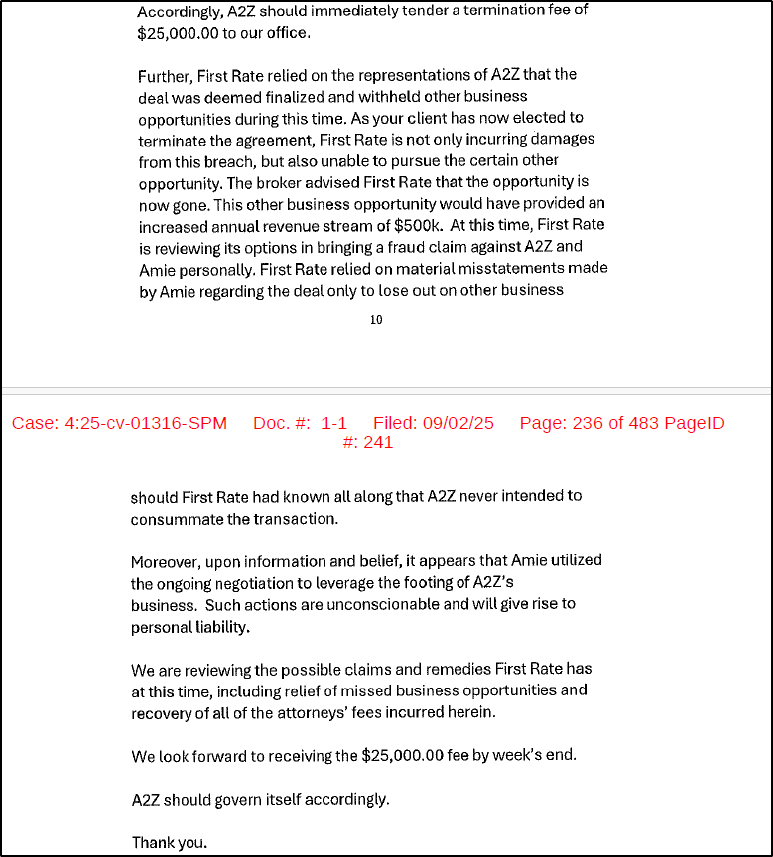
At the center of the federally litigated dispute is the valuation of A2Z Field Services prior to its sale. In the order mill business model, the value of a company does not come from buildings or equipment. Instead it comes from the steady flow of work orders from banks, mortgage servicers, and asset managers. If a vendor can demonstrate a reliable stream of inspections and preservation assignments, the company may command a significant purchase price. Buyers are essentially purchasing the pipeline itself. Allegations surrounding the lawsuit suggest that the pipeline associated with A2Z may have been presented in a way that inflated its true value. If the order flow was unstable or dependent on relationships that could easily move elsewhere, the valuation could have been dramatically overstated. Fraudulent inducement claims often arise in precisely these situations, where one party claims it was persuaded to enter a transaction based on material misrepresentations. In an industry where relationships determine revenue, misrepresenting those relationships can collapse an entire acquisition overnight. This, coupled with the refusal to pay a termination fee, is what is pushing the multi-million dollar litigation.
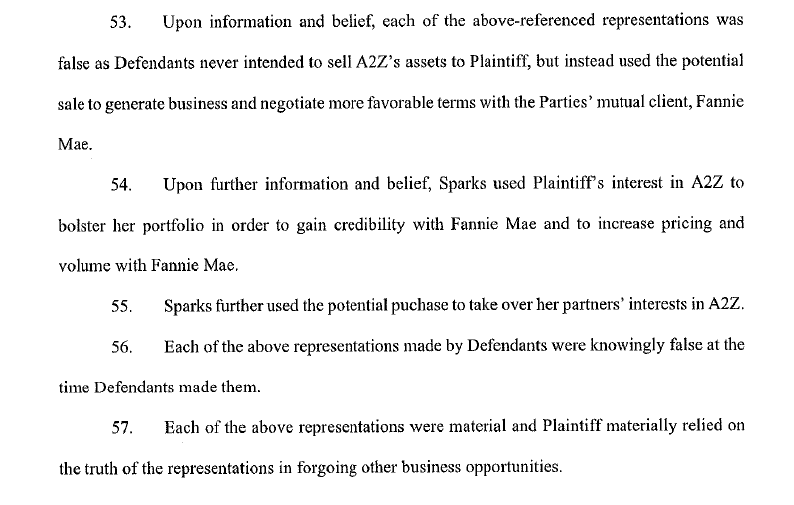
The dispute grows more complicated with allegations that A2Z Field Services was later sold to Black Dome after the initial transaction. According to claims tied to the litigation, that resale may have occurred without payment of a contractual termination fee that was required under the original agreement. Termination provisions are common in acquisition contracts precisely because they prevent sellers from redirecting the business to a different buyer immediately after closing. If such a clause existed and was ignored — as court documents and emails exclusively obtained by Foreclosurepedia show — the act could represent a direct breach of contract. The allegation that the company was resold without honoring those contractual obligations transforms the case from a dispute over valuation into a broader fight over whether the original sale was ever intended to stand. Courts examining these cases typically focus on the timeline of events surrounding both transactions. Emails, negotiations, and internal communications often become crucial evidence. In this case those records may reveal whether the second sale was planned long before the first one was completed. And in the thousands of pages of emails, contracts and litigation we have reviewed, it looks like the honeymoon period of NAMFS rebranded is finally over.
For contractors working within the mortgage field services industry, the legal maneuvering behind such transactions is rarely visible. Inspectors spend their days performing occupancy checks and documenting property conditions for lenders and servicers. Field Service Technicians perform the labor that keeps distressed properties secure and maintained, including grass cuts, debris removal, lock changes, and winterizations. Both groups depend on order mills to route work into their territories. When ownership of those platforms changes, the contractor network often receives little more than a short email announcement. Behind that announcement may lie months of negotiations that determine which company will control the pipeline. When those negotiations collapse into litigation, the contractor network becomes collateral damage as seen today in the collapse of Black Dome’s ability to pay Labor. The companies fighting over ownership may never set foot on the properties being serviced, yet their decisions determine whether work orders appear on a contractor’s screen the next morning.
The involvement of leadership tied to NAMFS introduces an additional layer of controversy. The trade association has long promoted itself as a neutral professional body dedicated to improving industry standards. Yet critics within the contractor community have frequently questioned whether the organization primarily serves the interests of large vendors rather than the labor network performing the work. For contractors who already view NAMFS with skepticism, the situation reinforces longstanding concerns about transparency and accountability. It raises an uncomfortable question about whether the organization can credibly advocate for ethical standards while its own leadership becomes entangled in legal battles over vendor transactions.
The order mill model itself has long been criticized by Field Service Technicians who believe it concentrates power in the hands of a few companies controlling national order flow. Inspectors and technicians operate as independent businesses scattered across the country, each relying on these centralized platforms to receive assignments. When the companies operating those platforms become involved in disputes, the contractors have no influence over the outcome. Their work simply moves elsewhere or disappears entirely. Many technicians have watched vendor platforms rise quickly only to collapse just as fast when investor relationships change. The contractors who built their businesses around those platforms often receive no warning before the work vanishes. In that sense, the legal battle over A2Z is not just a corporate dispute. It is another example of how fragile the contractor economy can be when it depends on centralized order mills.
The Board of Peace’s CEO President Donald Trump’s soiree in Iran and the massive increases in fuel costs are not helping the matter. Fuel now consumes nearly a quarter of the price paid to Inspectors, the true boots on the ground. Zero price increases in 30+ years and no fuel surcharges has led to an 80%+ attrition rate when it comes to Labor in the Industry according to NAMFS.
NAMFS has historically promoted the narrative that the mortgage field services industry operates under a shared commitment to professionalism and ethical conduct. Yet critics have often argued that the organization functions more like a private networking club for vendors seeking access to servicer relationships. Conferences are filled with panel discussions about innovation and compliance, while the contractors performing inspections and preservation work rarely appear in leadership roles. When a lawsuit surfaces involving alleged fraud between companies connected to that same network, the narrative of industry unity begins to unravel. The situation resembles less a coordinated professional ecosystem and more a battleground where competing vendors fight for control of order pipelines. The legal system becomes the arena where those fights finally become visible.
Inspectors and Field Service Technicians watching this dispute unfold may find themselves asking a simple question. If the companies controlling national order flow can be bought, sold, and resold amid allegations of fraud, what does that say about the stability of the system distributing their work? The contractor network has always been treated as interchangeable within the vendor model. Companies promise servicers that work will be completed regardless of which contractors perform it. Yet when vendor platforms change hands, the contractors themselves are the first to feel the shockwaves. Assignments disappear, portals shut down, and payment pipelines freeze while corporate disputes play out in courtrooms. The people maintaining the properties are left navigating the fallout.
The lawsuit surrounding the sale and resale of A2Z Field Services may ultimately become one of the most revealing disputes the industry has seen in years. If the allegations of fraud and contractual violations are proven, the case could expose how vendor valuations are constructed and how those valuations can be manipulated. Altisource had estimated on an earnings call that for every one percent in default $700 Million or so was expended in our Industry — unadjusted for inflation from 2018. It may also shine a harsh light on the relationships between vendors who simultaneously compete for order flow while sharing the same trade association stage. For NAMFS, the case presents a reputational challenge that cannot be dismissed as a minor disagreement between private companies. The involvement of its own leadership means the organization’s credibility is inevitably drawn into the conflict.
This investigation marks the beginning of a broader upcoming series examining the order mill economy that dominates mortgage field services. As we go forward, we are going to dig deep into Steve Horne, Amie Sparks, and Chad Rulo. Future installments will explore how vendor platforms are valued, how contractor networks are used to justify those valuations, and how internal industry relationships influence the flow of work orders nationwide. As the legal battle between companies connected to NAMFS unfolds, one fact becomes increasingly clear. The public image of unity promoted by the industry may be little more than a thin veneer covering a far more aggressive struggle for control of the pipelines that power the mortgage field services economy.